Let me be direct: the search landscape changed while most businesses were still arguing about keyword density. As a technical SEO professional who has spent years monitoring and testing how large language models crawl, index, and cite content, the shift is real, measurable, and accelerating fast.
Google still matters enormously. But ChatGPT now has 800 million weekly active users. Perplexity processes over 1.2 billion queries per month. These are not niche tools. They are where your customers go right now to make buying decisions. And the rules of visibility there are fundamentally different.
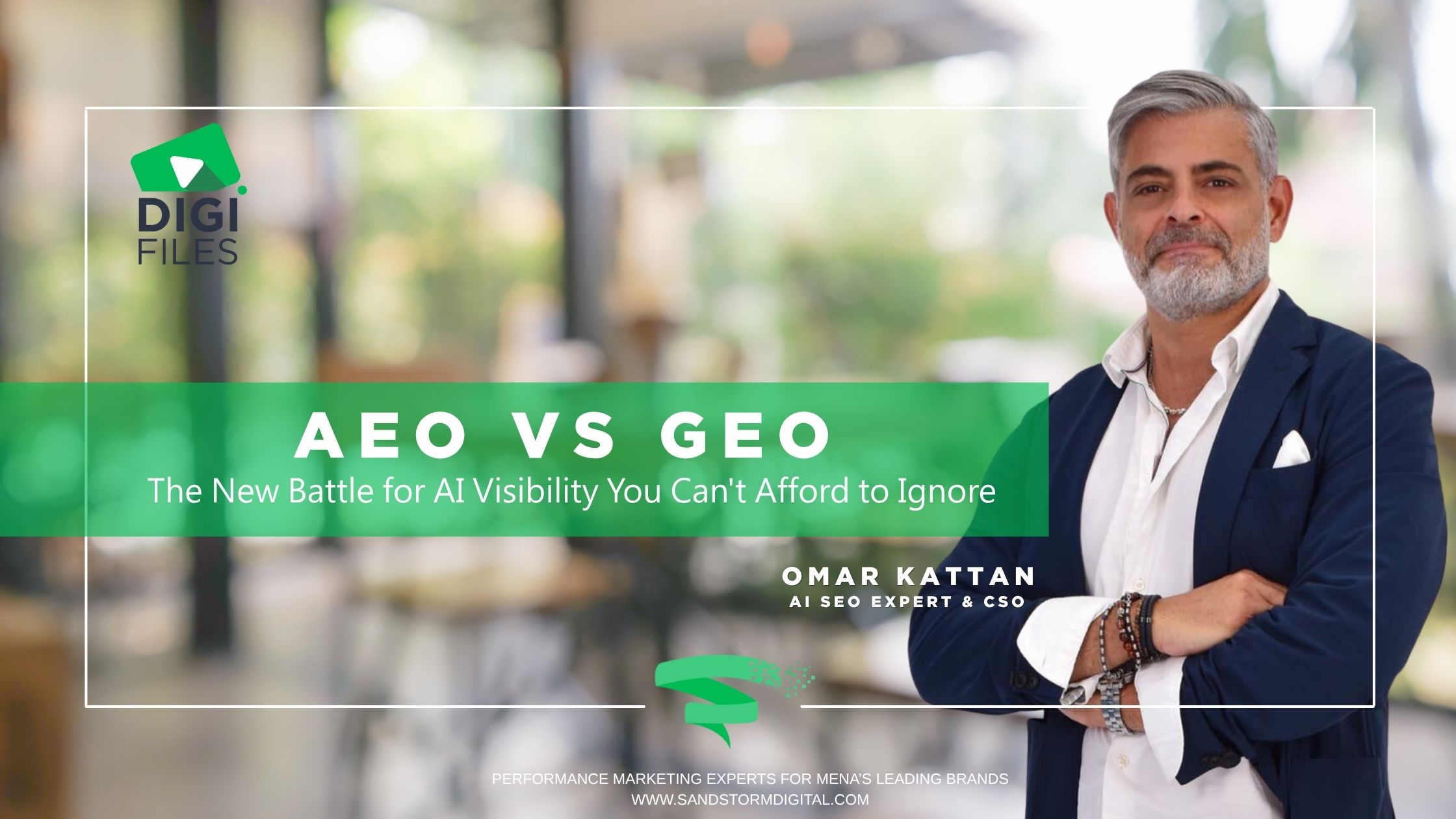
This is where AEO and GEO come in and understanding the distinction between them could be the most commercially important thing your marketing team does this year.
What Is AEO (Answer Engine Optimization)?
AEO is the practice of structuring your content so that AI-powered answer systems including Google AI Overviews, Siri, Alexa, and Bing Copilot extract and surface it as the direct answer to a user’s question. Think of it as winning “position zero” where your content is displayed before the first organic result, without the user needing to click anywhere.
AEO is rooted in extraction. The engine does not generate a response from its own knowledge. It finds a passage on your page, evaluates its authority and structure, and surfaces it. That means AEO success is about clarity, schema markup, FAQ structure, and answering the question in the first 10 to 15 words before elaborating.
What Is GEO (Generative Engine Optimization)?
GEO targets a different kind of AI engine, one that does not extract a passage from your site but synthesizes a brand-new response and then cites its sources. ChatGPT, Claude, Perplexity, Google Gemini, and Grok all operate this way.
When a user asks ChatGPT “What’s the best digital marketing agency in [city]?” or “What tools should I use for technical SEO?”, the AI writes its own answer but draws from sources it has learned to trust. GEO is the art of becoming one of those trusted sources. That requires depth, authority signals, original data, expert attribution, and what we call citation-worthiness.
Early adopters of GEO-ready content are being discovered up to 10x faster by generative engines compared to brands relying on organic SEO alone. The mechanism is trust, not ranking.
AEO vs GEO: Side by Side
Answer Engine Optimization
- Targets Google AI Overviews, Siri, Alexa
- Mechanism: content extraction
- Wins position zero / featured snippets
- Requires FAQ schema, short direct answers
- Measured by snippet wins and CTR
- Best for high-volume informational queries
Generative Engine Optimization
- Targets ChatGPT, Perplexity, Claude, Gemini
- Mechanism: synthesis and citation
- Wins inline citations in AI-generated answers
- Requires original research and depth
- Measured by citation frequency and brand mentions
- Best for B2B research and considered purchases
What This Means for Your Business
| Optimization Signal | AEO | GEO |
|---|---|---|
| FAQ schema and structured data | Strong | Partial |
| Original data and proprietary research | No | Strong |
| E-E-A-T signals and author credentials | Strong | Strong |
| Token-efficient page architecture | Partial | Strong |
| Concise answer-first writing | Strong | Strong |
| Citation networks and outbound authority links | No | Strong |
| Page speed and Core Web Vitals | Strong | Strong |
| Conversational long-form depth | No | Strong |
The good news: you do not have to choose. At Sandstorm Digital, we have built an integrated framework that runs AEO and GEO in parallel, because the brands winning in 2026 are the ones showing up in both Google’s answer boxes and ChatGPT’s cited responses.
The Technical Layer Most Agencies Are Missing
Here is something tested extensively that rarely gets discussed: token efficiency matters for GEO. A 200KB page bloated with client-side JavaScript costs a large language model roughly 50,000 tokens to parse. A clean, well-structured 40KB page delivers the same information for around 10,000 tokens, an 80% reduction that directly increases your citation probability. Generative engines, operating at scale, deprioritize expensive sources. Your page architecture is not just a UX concern. It is an AI visibility concern.
Similarly, entity disambiguation, making sure AI systems understand precisely who your brand is, what you do, and who you serve, is foundational to GEO. Without it, LLMs may correctly understand your content but attribute your expertise to a competitor with clearer entity signals.
Our AI-Powered Tools Built for This Challenge
AI Content Intelligence for GEO and AEO
Prosely.ai is our content intelligence platform built to close the gap between how you write and how AI engines read. It analyses your content for citation-worthiness, answer-extractability, E-E-A-T signal density, and entity clarity, then gives you an actionable GEO/AEO optimisation score. Stop guessing whether ChatGPT will cite you. Know before you publish.
prosely.aiAI Visibility Tracking and Search Intelligence
Rankspark.ai monitors how your brand and content are represented across generative AI platforms including ChatGPT, Perplexity, Google AI Overviews, and Gemini. Track citation frequency, brand sentiment in AI responses, and identify the exact content gaps preventing you from being recommended. The dashboard purpose-built for the AI search era.
rankspark.aiThe Unified Strategy: SEO + AEO + GEO
Traditional SEO is not dead. It is the foundation. Generative engines rely on the same authority and relevance signals that traditional search algorithms have always valued. What has changed is the surface area. You now need visibility across three interconnected environments: Google’s blue links, AI answer boxes, and generative AI platforms.
The brands that will dominate the next five years are those building content that is simultaneously authoritative enough for Google, extractable enough for AEO, and citation-worthy enough for GEO. It is a higher bar, but it is also a higher moat against competitors still thinking in keywords alone.