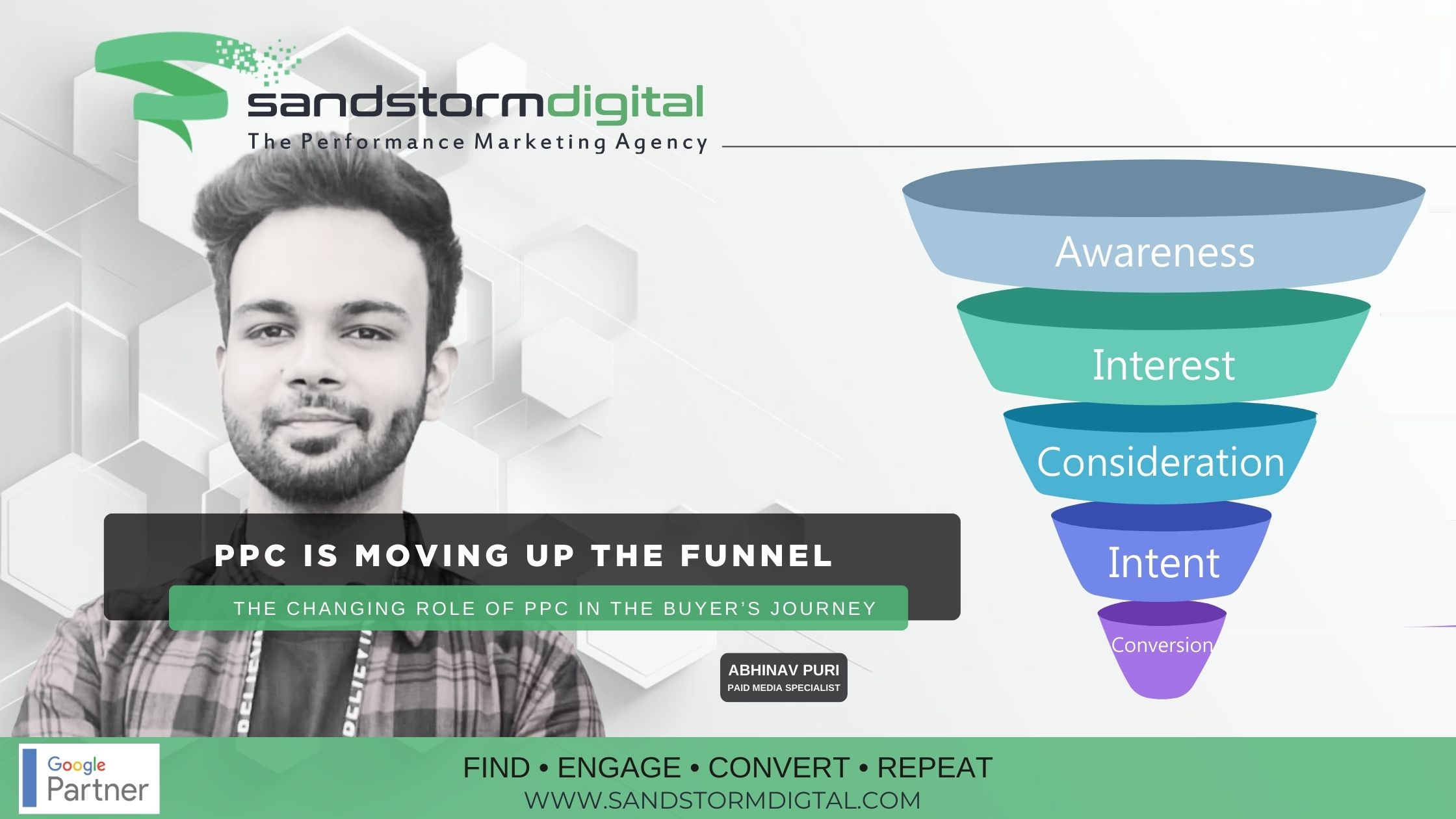
PPC used to have a very clear role. Capture demand, drive conversions, and prove efficiency. Anything earlier in the journey usually lived with content, brand, or social teams.
That line no longer exists.
As search behavior changes and ad platforms evolve, paid media is influencing decisions much earlier than many teams realize. PPC is no longer only responding to intent. It is increasingly shaping it.
This shift is already happening, whether advertisers are planning for it or not.
How paid media became part of awareness
Search is no longer a simple list of links. Users research, compare, and form opinions directly within search results, video feeds, and discovery environments.
Paid ads now appear alongside informational queries and early research moments. These are not users ready to buy. They are users trying to understand a problem or explore options.
That puts PPC in the same space as blog posts, webinars, videos, social content, research, and educational resources. Awareness is no longer limited to organic or owned channels. Paid media is now part of how people discover brands in the first place.
Awareness content still needs a purpose
A common assumption is that awareness content does not need to convert. While it may not drive immediate revenue, it still needs to move users forward in some meaningful way.
Many teams still measure success by traffic alone. Pageviews and impressions are easy to report, but they rarely explain impact.
The real value of awareness content shows up in how it influences the buyer’s journey. That influence often looks like longer engagement, multiple pages visited, repeat exposure, signups, downloads, or assisted conversions later on.
When PPC supports awareness content, those signals matter just as much as the click itself.
Why PPC teams can no longer ignore this stage
PPC teams often treat upper-funnel content as out of scope, focusing only on bottom-funnel keywords and conversion-driven campaigns.
The problem is that the strongest conversion performance usually comes from audiences who already recognize the brand, understand the problem, or trust the message.
If a piece of content is already attracting attention organically, paid media can be used to extend what is working rather than chasing volume with generic campaigns. The goal is not more content. The goal is better alignment between message, audience, and intent.
Quality consistently outperforms quantity.
Measuring awareness requires better signals
Likes and views are not enough to understand whether awareness efforts are effective.
When PPC supports early-stage exposure, teams need to look at how users actually interact with what they see. Metrics like time spent on site, scroll depth, pages per session, comments, shares, and repeat exposure provide a clearer picture of whether interest is being created.
These signals also help connect early exposure to downstream performance without relying entirely on last-click attribution.
PPC is becoming the connector between content and conversion
The most effective paid media strategies today do not isolate PPC from content. They connect the two.
PPC can surface educational content at the right moment, reinforce positioning during early research, and support longer decision cycles by staying present throughout the journey. This does not remove accountability. It expands it beyond immediate ROAS to include influence, progression, and engagement.
Paid media becomes a bridge rather than a final step.
The shift most teams are still catching up to
PPC moving up the funnel does not mean abandoning performance goals. It means recognizing that performance is shaped long before a conversion happens.
Teams that continue to treat PPC as strictly bottom funnel will struggle to explain rising costs and inconsistent results. Teams that embrace awareness as part of paid media strategy gain more control over how demand is created, not just captured.
PPC is no longer only about efficiency at the end of the journey. It is about impact across the entire journey.
And that shift is already underway.