On mobile devices, 77% of search queries now end without a single click to an external website. That number gets worse when your pages are not even indexed. Crawl budget is the reason most sites never make it to the starting line, and in 2026 it has a new dimension that most technical SEOs are not accounting for.
What Is Crawl Budget and Why Does It Matter?
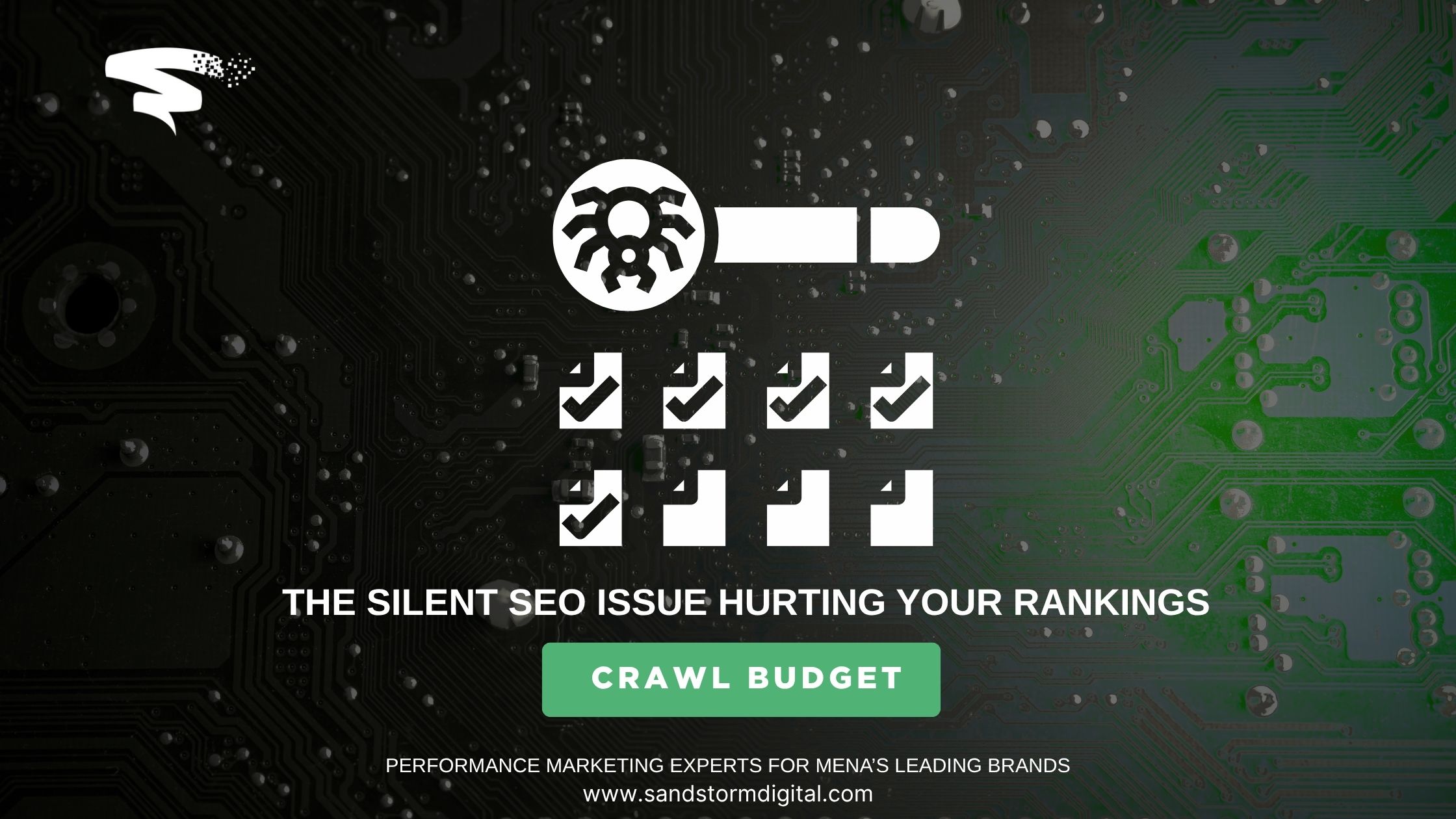
Crawl budget is the number of pages Googlebot will crawl on your site within a given timeframe. Google does not have unlimited capacity to crawl every page on the internet every day. It allocates resources based on two factors: how quickly your server responds (crawl rate limit) and how valuable your pages appear to be (crawl demand).
The formula is simple: Crawl Budget = min(Crawl Capacity, Crawl Demand). What this means in practice is that even if your server is fast and healthy, Google will not crawl more pages than it believes are worth crawling. And if your site is wasting that budget on low-value URLs, your most important pages end up under-crawled, under-indexed, and invisible in search.
For small sites under a few hundred pages, crawl budget is rarely a concern. For mid-to-large sites with thousands of pages, product catalogues, filtered navigation, or frequently updated content, it is often the single highest-impact technical fix available.
The Six Ways Sites Waste Their Crawl Budget
In technical audits across sites of every size, the same patterns appear repeatedly. These are the six most common crawl budget killers.
1. Faceted Navigation and Filter URLs
This is the most common culprit on e-commerce and large catalogue sites. When users filter by colour, size, price, or any combination of attributes, most CMS platforms generate a unique URL for each combination. A site with 500 products and 10 filter options can quietly produce tens of thousands of indexable URLs, most of which contain near-identical or duplicate content. Googlebot crawls them all, exhausting its budget before it reaches the pages that actually matter.
2. Redirect Chains and Loops
Every redirect Googlebot has to follow consumes crawl budget. A chain of three or more redirects is particularly wasteful. Redirect loops, where URL A points to URL B which points back to URL A, can trap Googlebot entirely. These accumulate over time, especially on sites that have migrated platforms, changed URL structures, or run through multiple redesigns without cleaning up the legacy architecture.
3. JavaScript-Heavy Rendering
Googlebot uses an evergreen Chromium-based system to render JavaScript, but the rendering pipeline is a two-wave process. The HTML is fetched first, then JavaScript is rendered separately. Both waves consume crawl resources. If your site depends heavily on client-side rendering for critical content, and that rendering is slow or dependent on blocked resources, Googlebot may give up before the content is fully processed. Prioritising stable server-side rendered templates for your most important pages removes this friction entirely.
4. Duplicate Content Without Canonicalisation
Printer-friendly versions of pages, session ID parameters appended to URLs, mobile and desktop versions served at separate URLs, product pages accessible at multiple paths: all of these create duplicate content that Googlebot will crawl separately. Without canonical tags pointing clearly to the preferred version, you are paying crawl budget for pages that should not exist as independent URLs.
5. Slow Server Response Times
Google throttles its crawling on sites with slow server responses to avoid overloading them. A site that takes 2 to 3 seconds to respond to Googlebot will receive significantly fewer crawl requests per day than a site responding in under 200 milliseconds. This is why Core Web Vitals and server performance directly influence crawl budget, not just user experience. Faster pages are simply easier and cheaper for Google to crawl.
6. Orphaned and Low-Value Pages
Pages with no internal links pointing to them are crawled infrequently, if at all. But they still consume crawl budget when Googlebot finds them through sitemaps or external links. Tag pages, archive pages, thin landing pages created for expired campaigns, and outdated blog posts with no internal link equity are all common sources of crawl waste. A clean URL inventory means Googlebot spends its time on pages with genuine business value.
The New Problem: It Is No Longer Just Googlebot
Crawl governance has become a multi-bot problem. AI training crawlers from OpenAI, Anthropic, Meta, Apple, and others are now hitting servers simultaneously alongside Googlebot, Bingbot, and social media scrapers. Each of these bots operates independently and does not coordinate with the others.
The practical consequence is that your server’s crawl capacity, which determines how aggressively Googlebot is willing to crawl, is being compressed by bots you may not even be aware of. A site that was previously well-optimised for crawl efficiency may now be showing signs of budget strain simply because new AI crawlers have entered the picture.
The solution is active bot management through your robots.txt file and server-level rate limiting. Not all AI crawlers respect robots.txt directives, but most reputable ones do. Reviewing your log files to identify which bots are consuming disproportionate resources is now a standard part of a technical SEO audit, not an optional extra.
Where Structured Data Fits In
Structured data is most commonly discussed in the context of rich results: the star ratings, FAQ dropdowns, and product prices that appear directly in search results. But in 2026, its role in crawl efficiency is just as important and far less understood.
When Googlebot crawls a page with well-implemented JSON-LD schema, it can categorise and process the content faster. It understands immediately whether the page is an article, a product, a local business, an FAQ, or an event. This clarity reduces the interpretive work Googlebot has to do, which means it can process more pages within the same crawl session. On large sites, this efficiency compounds significantly.
There is also a direct connection between structured data and AI search visibility. AI Overviews, ChatGPT Search, and Perplexity all depend on crawled and indexed content. If Googlebot cannot reach and re-process your pages, they will not appear in AI-generated answers regardless of how good the content is. Three structured data habits that directly improve AI search visibility alongside traditional indexing are:
- FAQ schema on key pages, which helps AI systems extract and surface answers faster after crawling
- Accurate lastmod dates in XML sitemaps, which signals to crawlers that content has genuinely been updated and is worth re-processing
- Strong internal linking that connects schema-rich pages topically, since AI answer engines favour pages with clear contextual relationships over orphaned pages that have no link equity
A controlled test comparing two equivalent pages, one with well-implemented JSON-LD and one without, found that only the schema-marked page appeared in a Google AI Overview. The page without structured data was never indexed. That is the clearest evidence available that schema markup in 2026 is not optional for sites that care about AI search visibility.
The Crawl Budget Audit: What to Check and When
A practical crawl budget audit does not need to be complicated. The following cadence covers the most impactful checks at each frequency.
Weekly
- Review Crawl Stats in Google Search Console for spikes, drops, or unusual changes in crawl volume
- Monitor Index Coverage for new 4xx or 5xx errors and new redirect chain flags
Monthly
- Run a full site crawl using Screaming Frog or a comparable tool to identify new redirect chains, broken internal links, and orphaned pages
- Audit your sitemap to confirm it contains only genuinely indexable, canonical URLs with accurate lastmod dates
- Check that faceted navigation parameters are excluded from crawling via robots.txt or canonical tags
Quarterly
- Analyse server log files to verify Googlebot is spending its budget on your priority pages, not on low-value URLs
- Review which AI and third-party bots are appearing in logs and assess whether any are consuming disproportionate server resources
- Validate structured data implementation on key pages using Google’s Rich Results Test and Search Console Enhancements reports
The Bottom Line
Crawl budget optimisation is not the most glamorous part of SEO. It does not produce the kind of visible output that clients can screenshot and share. But on any site with significant page volume, it is often the difference between content that gets found and content that sits invisible in the index.
The goal is not to get Googlebot crawling more pages. The goal is to get it crawling the right ones, efficiently, consistently, and in a way that feeds both traditional rankings and AI search visibility. Clean site architecture, controlled URL inventory, fast server response, and well-implemented structured data are the four pillars that make this possible.