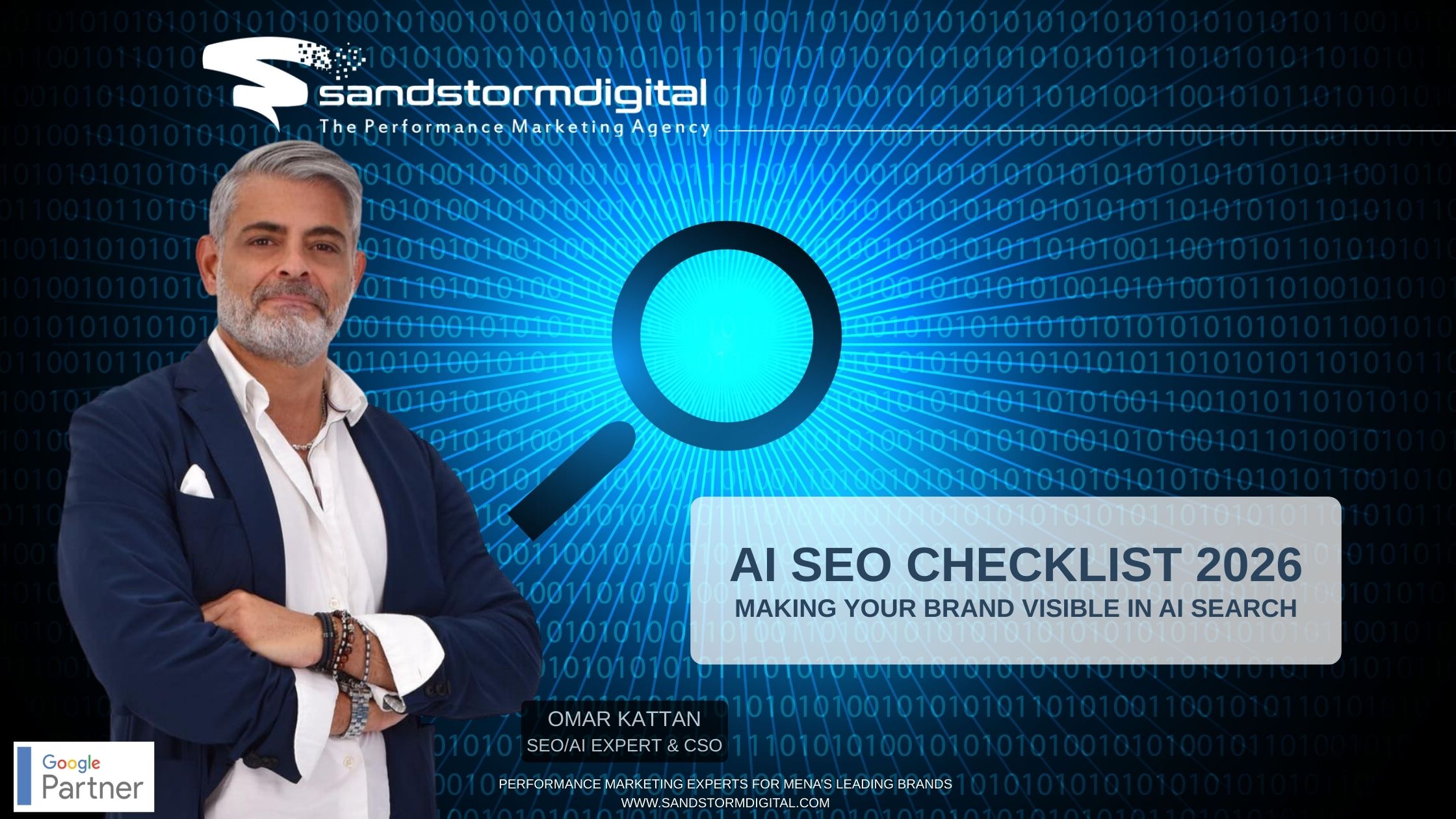
Search optimization has entered a new era. Instead of just ten blue links, we’re now competing for attention in AI-generated answers on Google’s Search Generative Experience (SGE), Bing Chat, ChatGPT, and other AI-driven platforms. Gartner analysts predict traditional search volume will drop by 25% by 2026 as users turn to AI assistants for answers. In this landscape, being the cited source in an AI answer is the new page one , if your content isn’t being quoted, it might as well be invisible. To help SEO professionals and agency owners navigate this shift, we’ve compiled the AI SEO Checklist (2026) , eight core focus areas to ensure your brand remains highly visible in AI-driven search results.
The AI SEO Checklist (2026) outlines eight core areas crucial for optimizing brand visibility in AI-driven search results. It spans everything from entity authority and content structure to technical crawlability and performance monitoring.
In this comprehensive guide, we’ll expand on each of the checklist’s eight pillars in detail. For each area, we’ll explain the recommended tactics, provide real-world SEO examples (and case studies where available), and include fictional examples using the AI-powered SEO platform RankSpark.ai to illustrate how an agency might apply these tactics with automation or AI assistance. We’ll also discuss additional strategies beyond the original checklist, accounting for how AI influences search , such as retrieval-augmented generation (RAG) and AI answer engines that synthesize content. Let’s dive into each of these eight focus areas and how to ace them in 2026.
1. Entity Authority & Brand Definition
Establishing your brand as a recognized entity is foundational for AI-era SEO. AI systems like Google’s Knowledge Graph and OpenAI’s models need to understand who you are and what you do in a consistent, unambiguous way. This checklist area is all about shaping a strong brand presence that AI trusts and recognizes.
Build consistent brand definitions across all pages. Ensure that your website and external profiles repeat a concise, standardized description of your brand. Models rely on pattern consensus , if most sources agree on your “ground truth” description, the AI will treat it as fact. For example, if your SaaS product is sometimes called a “CRM tool” and elsewhere a “sales pipeline platform,” an AI might get confused or treat them as different entities. Define your brand in one or two sentences (e.g. “[BrandName] is a [category] platform that helps [audience] achieve [outcome] with [key features]”) and reuse this everywhere , your homepage, about page, LinkedIn, press releases, directory listings, etc..
RankSpark Example: An agency uses RankSpark to automatically scan their site and online profiles, flagging any pages that don’t match the approved one-line brand definition. RankSpark then suggests edits to harmonize these pages, ensuring the AI sees one coherent entity across the web.
Create topical clusters with pillar pages. Depth of content signals authority. AI engines favor websites that consistently “own” their topic by covering it comprehensively. Organize your content into clusters centered on major pillar pages. For instance, a financial advisor might have a pillar page on “Small Business Financial Planning” supported by cluster pages on subtopics like cash flow, taxes, retirement, etc. Interlink them strategically (using descriptive anchor text) so the AI sees a well-structured knowledge base. This topical clustering not only boosts traditional SEO but also tells generative models that your site is a go-to source in that domain.
Real-world example: HubSpot built a cluster of pillar content and subtopics around “inbound marketing,” which helped it dominate that topic. As AI answer engines emerged, HubSpot’s broad coverage meant it was frequently referenced for marketing questions.
Use semantic internal linking strategically. Internal links aren’t just for Google’s crawler; they also help AI models map relationships between concepts on your site. Rather than linking pages solely by exact-match keywords, link them by entity and context. For example, if you mention a product on a blog post, link to the product page with anchor text that provides context (e.g. “CRM software” linking to your CRM product page). This reinforces your site’s semantic structure. By weaving a tight net of relevant internal links, you signal to AI what pages are most important and how topics connect. Internal linking tools (some now AI-powered) can assist by suggesting context-aware links at scale.
RankSpark Example: RankSpark’s internal link optimizer analyzes an agency’s blog posts and suggests new internal links based on semantic relevance. It might recommend linking the phrase “lead nurturing” in a blog post to a “Marketing Automation Guide” pillar page, strengthening the topical association across the site.
Maintain Wikipedia/Wikidata presence. In the AI era, if you’re not in the right databases, you don’t exist. Wikipedia and Wikidata are two of the most crucial sources for entity information. Wikipedia offers human-readable credibility (a full article about your brand), while Wikidata provides machine-readable facts (for example, YourCompany → founded by → Jane Doe, 2015). Many AI systems (chatbots, voice assistants, knowledge panels) rely on these sources to answer queries about entities. If your brand qualifies, work on getting a Wikipedia page (though note the strict notability criteria). At minimum, ensure you have a Wikidata item with up-to-date facts and citations.
Real-world example: When OpenAI launched ChatGPT browsing, users noticed it could instantly answer “Who is X company?” for those listed on Wikidata. Companies like Notion.so saw their knowledge panel appear and their info used in AI answers soon after creating Wikidata entries.
RankSpark Example: RankSpark’s Entity Manager module monitors Wikipedia and Wikidata for your brand. It can alert you if your Wikipedia article is out-of-date or if your Wikidata entry is missing important properties. It even provides a guided workflow to create a Wikidata entry, suggesting which facts (with sources) to include to maximize AI visibility.
Publish original research & case studies. In an era where AI can generate generic content, originality is a superpower. Generative AI tends to regurgitate consensus information; to stand out, give it something truly unique to cite. Publishing original research (industry surveys, data studies, whitepapers) or detailed case studies with exclusive data can dramatically boost your authority. AI systems prefer to cite specific, verifiable facts , especially numbers and stats that come from primary research. For example, if you run an e-commerce agency, releasing a study like “2025 Holiday Shopping Trends: 5 Key Stats” might get your data quoted by blogs and by AI answers looking for the latest stats. In one LinkedIn analysis, data-driven content saw 30-40% higher citation rates by AI than content without original data. Case studies are also powerful when they include concrete results: e.g. “Our SEO campaign increased organic traffic by 47% in 6 months” is a citable nugget that an AI might pull in when someone asks, “How effective is SEO for B2B?”.
Real-world example: NerdWallet invested heavily in unique financial data and research; even as their organic traffic fell 20%, their revenue rose 35% in 2024, indicating that being referenced in AI-driven contexts was driving conversions without clicks.
RankSpark Example: The platform’s content planner highlights topics where little original research exists and encourages you to fill those gaps. It might say, “No recent survey data on voice search consumer behavior , consider running a small poll and publishing the results.” RankSpark can even assist by aggregating survey tools and helping visualize the data for your content. By using such features, an agency ensures they produce cite-worthy content that AI can’t simply fabricate.
In summary, Entity SEO in 2026 is about establishing trust and clarity around your brand. You want to be the obvious authority on your subject matter. By unifying your brand message, building out well-structured topical content, leveraging knowledge bases like Wikipedia/Wikidata, and producing original insights, you make it easy for AI systems to recognize your brand as a trusted entity. The payoff is big: when AI assistants and answer engines confidently include your name or quote your content, you’ve essentially achieved a new form of “rank” , one that can influence users even without a click.
2. GEO & Citation Strategy
Generative Engine Optimization (GEO) is the practice of optimizing content so that generative AI chooses to cite it in answers. A key part of that is a citation strategy , structuring your content in a way that encourages AI to pull from it and attribute it. In this section, we focus on how to craft content that AI loves to quote: delivering direct answers, packed with facts, clearly sourced and unambiguous.
Apply an answer-first content structure. Don’t make AI dig for the answer , lead with it. This means using the inverted pyramid style of writing: start each article (or section) with a concise answer or definition in the first 1,3 sentences. For example, if the query is “What is zero-click SEO?”, your page on that topic should open with something like: “Zero-click SEOis the practice of optimizing content to be answered directly on the search results page or by AI, so users get their answer without clicking through. It involves schema markup, succinct answers, and providing value without a click.” This 40-60 word summary up top acts as a snippet that AI can grab. Research shows that front-loading a direct answer increases the chance of being cited in an AI result. Everything after that initial answer can then elaborate with details and context.
Real-world example: Google’s SGE (AI Overview) often bolds or quotes a sentence from a source as the direct answer. Content that had a one-sentence answer at the top (often mirroring the question) saw significantly higher inclusion in those AI summaries. Many publishers have adapted by adding a quick answer paragraph right after the headline.
Increase fact density (include stats or facts every ~150,200 words). AI models love quantifiable specifics. A study of AI citation patterns found that content with frequent statistics (with sources) gets cited far more often than content with only general text. The guideline many GEO strategists suggest is to include a data point or compelling fact at least every couple of paragraphs. This doesn’t mean dumping random numbers, but look for opportunities to back up claims with stats: “68% of consumers do X,” “In 2025, the market size was Y,” etc., with a credible source cited. These act like factual anchors that an AI can latch onto. For instance, instead of saying “many users prefer mobile apps,” say “73% of online banking users prefer mobile apps over desktop.” The AI would much rather quote the latter.
Real-world example: One LinkedIn article on GEO noted that adding relevant statistics with source attributions improved content’s AI visibility by 30-40% in testing. In practice, news sites like the BBC or Washington Post, which pepper articles with data and quotes, are disproportionately referenced by Bing Chat and other answer engines because their content is richly fact-based.
RankSpark Example: RankSpark’s content editor comes with an AI research assistant. As you write, it can suggest relevant stats from authoritative sources (e.g. “According to a 2025 Gartner report, 85% of customer interactions are managed with AI”). It can even auto-generate a citation. By integrating these suggestions, your content stays fact-dense and AI-friendly.
Cite authoritative sources (and use expert quotes) consistently. This might seem counterintuitive , why send readers to other sources? But linking out to trusted sources (and including quotes from experts) actually boosts your credibility in the eyes of AI. Large language models have been trained on text where citations often correlate with factual accuracy. When your content cites authoritative publications, studies, or well-known experts, it signals that you’ve done your homework. In fact, a Princeton study on GEO found that citing external authoritative sources in your content “meaningfully boosted citation rates” by AI systems. Think of it as E-E-A-T (Experience, Expertise, Authoritativeness, Trustworthiness) for AI: referencing authority sites and including expert commentary shows expertise and trustworthiness. For example, a blog post about cybersecurity could quote a famous security researcher or refer to a stat from an IBM report. Not only does this strengthen the content, but if an AI summarizes your page, it might incorporate those same trusted names, increasing the chance it trusts the summary enough to show it.
Real-world example: Healthline’s articles frequently cite medical journals and include quotes from doctors. As a result, when you ask an AI health questions, Healthline pages are often used or cited because the AI “sees” those medical references as indicators of reliability.
RankSpark Example: RankSpark’s Credibility Checker scans your draft and flags sections with unsubstantiated claims, prompting you to add a citation. It can even fetch a few reputable source suggestions. It will also analyze the authority of sources you cited , nudging you if, say, you cited a random blog where a government report could be better. This way, agencies can systematically enforce a culture of well-sourced writing.
Include expert quotes and testimonials. Similar to citing external sources, using direct quotes from subject matter experts (including internal experts) can improve your content’s citation-worthiness. A quote provides a human voice and often encapsulates a key point succinctly. AI tends to extract and present concise nuggets , a pithy quote from an expert in your article might catch its attention. Moreover, quotes can carry the credibility of the person quoted. For example, a piece on climate policy might include a line from a UN climate scientist. If an AI is formulating an answer on climate change solutions, it could incorporate that quoted line, attributing it to your page. Expert quotes were observed to deliver similar citation gains as statistics in some tests. Testimonials (like customer quotes or case study snippets) can also serve, especially for queries about products or services (“why choose [X]?”, etc.).
Real-world example: When ChatGPT was asked about the benefits of remote work, one of its responses included a quote from a Forbes article where a CEO said “Our productivity jumped 20% after going hybrid.” The AI picked it because it was a concrete statement by an expert source. Tip: If you can’t get a fresh quote, consider citing a well-known quote from an expert (with attribution). Even something like, “As Google’s John Mueller explained in 2023, ‘AI-generated content isn’t inherently bad for SEO, it’s about the quality.’” could elevate your content’s trust factor. Just ensure quotes are accurate and contextual.
Reduce ambiguity in all content. Ambiguity is the enemy of AI comprehension. If your content isn’t crystal clear about what you’re discussing, a generative model might misinterpret or skip it. To “reduce ambiguity,” focus on using consistent terminology and explicit language. For example, if your article uses “AI SEO,” “AEO,” and “GEO” interchangeably without explanation, an AI might not link those as the same concept. Pick one term (or clearly define each on first use) and stick to it. Ensure pronouns like “it” or “they” have clear antecedents. Replace vague references (e.g. “in recent times” or “some people say”) with specifics (“In 2025,…”, “According to [Source],…”). Another aspect is entity consistency , if you refer to the same entity by slightly different names, the AI might think they are different things. For instance, don’t scatter variations like “IBM”, “I.B.M.”, “International Business Machines” across your text; pick one primary reference and perhaps mention the full form once (“IBM (International Business Machines)”) to cement the connection. By writing in plain language and defining jargon, you make your content more extractable.
Real-world example: The query “What does ACME Corp do?” might prompt an AI to scan ACME’s site. If one page says “Acme is a leading tech innovator,” another says “At Acme Widgets, we pride ourselves…”, and another “ACME Corporation provides software solutions…”, the AI sees inconsistency in naming and possibly in focus. This may reduce confidence in summarizing ACME. If instead every page consistently states “ACME Corporation is a financial analytics software provider…”, the AI can safely use that fact. As one SEO puts it, models rely on pattern consensus , if 90% of sources say you are X and 10% say Y, the AI will lean on X. So strive for 100% consistency.
RankSpark Example: RankSpark’s semantic analysis tool will highlight any ambiguous terms or inconsistencies in terminology. It might point out, “You used ‘omnichannel marketing’ in one section and ‘integrated marketing’ in another , consider standardizing if they refer to the same concept.” It also checks for overly complex sentences that could confuse AI parsing. The tool essentially acts like a strict editor ensuring your content is unambiguous and AI-ready.
To sum up, GEO & citation strategy is about making your content the easiest to extract and trust. Structure your pages so that an answer engine can quickly find a direct answer, grab supporting facts, see credible references, and not get tripped up by unclear wording. You’re essentially formatting your content for an audience of AIs and people. By following an answer-first, fact-rich approach with clear sourcing, you greatly increase the odds that when an AI is answering a question in your topic area, it chooses your content to quote.
3. Content Structure & Format
Even the most insightful information can be lost on AI if it’s not packaged correctly. This section of the checklist focuses on how to format and organize your content for maximum AI visibility. The goal is to achieve “machine-readable” structure without sacrificing human readability. In practice, many of these tactics , like using short paragraphs, descriptive headings, lists, and FAQs , make your content better for users too. It’s a win-win.
Use semantic chunking , short, focused paragraphs (2,3 sentences each). Giant walls of text are a bane for AI (and human readers). Large language models parse content best when it’s broken into logical, bite-sized chunks. Aim for paragraphs that convey one idea each, typically in a few sentences. If a single sentence itself is long and complex, consider breaking it up or using sub-bullets. This “atomic content” approach makes each chunk potentially stand-alone. Remember, AI might quote just one sentence or paragraph , so each should make sense on its own. A good practice is to read a paragraph in isolation and see if it still communicates a complete thought. If not, it may rely on prior context (which an answer engine might ignore). By contrast, self-contained mini-paragraphs are ready to be plucked and presented out of context.
Real-world example: Wikipedia’s writing style naturally does this , short introductory paragraphs with direct facts. It’s no surprise that nearly half of ChatGPT’s top citations come from Wikipedia. Adopting a similar clarity can help your site.
RankSpark Example: When you feed your blog content into RankSpark’s analyzer, it will score the “chunking” of your content. It flags any paragraphs that are overly long or that tackle multiple topics at once. One agency found that after splitting some long paragraphs and simplifying the language (per RankSpark’s suggestions), their content started appearing more frequently in Bing’s AI answers for related queries.
Write headers as questions (and in natural language). Make your H2s and H3s work for you by phrasing them the way a user might ask in a conversational search. For example, instead of a section titled “Benefits of Cloud Computing”, frame it as “What are the benefits of cloud computing?”. This has two advantages: (1) it directly matches user queries (many people literally search or voice-ask questions), and (2) AI systems use those headings to understand what each section answers, making it easier to map to a query. It’s been noted that content with question-format subheadings often gets preference for voice search and AI snippet extraction. Ensure the question is clear and includes the keyword or entity of interest (like “How does [Product] pricing work?”). Then, in the paragraph immediately following that header, provide a concise answer first (as discussed in the previous section), followed by details. This Q&A style structure mirrors how QA systems are built.
Real-world example: A medium-sized SaaS saw their FAQ page (“Questions about [Product]”) gain traction in Google’s generative results after they rewrote each FAQ as a full question and beefed up the directness of the answers. One of their H3s went from “Integration with CRM” to “How does [Product] integrate with CRM systems?” , and suddenly that exact question (when asked to Bing Chat) returned a snippet from their page.
RankSpark Example: RankSpark’s content brief generator can automatically produce suggested question-formatted headings based on a keyword. If you input a target keyword like “local SEO”, it might suggest H2s such as “How does local SEO differ from traditional SEO?” or “What factors affect local search ranking in 2026?”. This helps writers structure content in a way that aligns with how questions are asked.
Add structured formats: lists, tables, and step-by-step instructions. Structured data isn’t just about schema (we’ll get to that later) , it also means structuring the content itself in easily digestible formats. Bulleted or numbered lists are great for AI extraction. They clearly delineate individual points, which AI can quote individually or as a set. For example, an article titled “10 Tips for Better Email Open Rates” presented as a numbered list stands a good chance of being pulled into an AI summary like “Here are some tips: 1) Compelling subject lines, 2) Personalize the send time, …” because each tip is isolated. Similarly, tables can be goldmines for AI if they contain comparisons or data. Imagine a table comparing three products , an AI can easily reference the specific row/column intersection relevant to a user’s question (“Which one is cheapest?” can be answered by scanning the price column). Step-by-step instructions (like a recipe or a “how to” guide with each step numbered) are also highly favored by answer engines since they imply a clear sequence. Google’s SGE often lists out steps from such content. The key is to use these formats where appropriate: lists for collections of ideas, tables for structured comparisons, steps for processes.
Real-world example: If you ask Perplexity “How to improve Core Web Vitals?”, it might respond with a step-wise list taken from a blog that enumerated the steps (e.g., 1. Optimize images, 2. Reduce third-party scripts, …). If your content had the same info in a long paragraph, it’s less likely to be selected than if it’s in a neat list. RankSpark.ai Insight: The RankSpark optimizer might recommend, “You have a paragraph listing multiple tools , consider turning this into a bullet list for clarity.” One case study saw an agency convert a pros/cons paragraph into a two-column table; this table was later excerpted by an AI answer engine comparing software options, whereas the original paragraph never was.
Create comprehensive FAQ sections. An FAQ section on your page (or a standalone FAQ page) is almost tailor-made for AI usage. By listing common questions with brief answers, you’re effectively pre-formatting content in a Q&A format that aligns exactly with user queries. Additionally, implementing FAQ schema markup (if it’s a webpage) can further enhance visibility (more on schema in Technical section). Include FAQs that cover the who/what/why/how of your topic, especially long-tail queries that might not fit naturally into the prose of your article. For example, on a product page you might add “FAQ: Can [Product] integrate with Shopify? , Yes, via our plugin…”. If someone asks an AI that same question, your page is a prime candidate to be cited.
Make sure your FAQ answers are concise and factual (one to three sentences) , if you ramble, the AI might truncate or ignore it. Many brands in 2026 have started maintaining an “AI FAQ” repository where they anticipate questions an AI or voice assistant might get asked about their product/service, and they publish official answers for those.
Real-world example: Autodesk added a detailed FAQ section to their support pages, and when users ask ChatGPT or Bing things like “Does [Autodesk Product] support [feature]?”, the answers often come verbatim from those FAQs. This wasn’t by chance , they structured those FAQs with AI in mind.
RankSpark Example: RankSpark’s FAQ Generator can help agencies quickly build out a robust FAQ section. It analyzes the page content and suggests relevant questions (pulled from People Also Ask boxes, forum discussions, etc.). The content team can then fill in accurate answers. RankSpark can even auto-add the appropriate FAQ schema. By deploying this, one agency expanded their pages with FAQ sections and saw improvement in both traditional SEO (rich results) and AI citations.
Optimize video content with transcripts and captions. AI cannot “watch” a video, but it can read text. If your site includes videos (YouTube embeds, webinars, etc.), always provide a transcript or at least detailed captions/summary of the video content. This not only makes your content accessible, but it gives AI something to chew on. YouTube’s importance is growing in AI citations , for explanatory queries, AI sometimes references YouTube videos (especially if they have transcripts). For instance, if someone asks “How to tie a bowline knot” on an AI platform, it might cite a popular YouTube video tutorial. That citation likely comes from the video’s caption text or a written step-by-step on the page. To capitalize on this, when you publish videos on your site (or YouTube channel), include the transcript text on the page or in the video description. Structure the transcript with timestamps or sections for clarity. Additionally, adding chapters or section titles inside the video (and matching text) can function like subheadings that AI can reference.
Real-world example: A cooking blog found that their recipe videos were rarely being mentioned by AI, even though they ranked well on Google. The fix was adding full transcripts and recipe step lists below each video. Soon, Bing’s AI would answer cooking questions like “How to make pasta carbonara?” with “According to [Blog], to make pasta carbonara: [steps 1, 2, 3…]” where those steps were pulled straight from the transcript/list on their page.
RankSpark Tip: The platform can integrate with your YouTube/Vimeo to fetch auto-captions and help you clean them up for posting. RankSpark also analyzes video pages and can report “Missing transcript” so you know which content to update. Since AI will cite video content if given textual hooks, this becomes a crucial part of on-page SEO for multimedia.
In essence, optimizing content structure & format is about making your content easy to parse and snippetize. By breaking content into logical chunks, labeling sections with intuitive questions, and using lists/tables/FAQs, you create many “hooks” for AI systems to latch onto. It’s like adding signposts throughout your content that say “Here’s a useful bit!” Not only does this improve your chances with AI, but it also improves human readability , readers can scan and find answers faster, which likely means better engagement and perhaps even those user behavior signals that still indirectly benefit SEO. Think of structure as the packaging that makes your high-quality content accessible to all, bots and humans alike.
4. Platform-Specific Optimization
Not all AI search platforms are the same. Google’s SGE, Bing’s various AI modes, ChatGPT’s browsing or plugin-enhanced answers, and emerging engines like Perplexity.ai each have their own “flavor” in terms of sources they favor and how they present information. A savvy SEO in 2026 needs to recognize these differences and optimize content (or presence) for each major platform. This section covers tailoring your strategy to specific AI channels , essentially, treating them as distinct search engines with distinct ranking factors.
Optimize for Google’s AI Overviews (SGE) with E-E-A-T in mind. Google’s Search Generative Experience draws heavily from Google’s existing index and ranking signals , which means Experience, Expertise, Authoritativeness, Trustworthiness (E-E-A-T) are paramount. To get featured in those AI overviews (the snapshot answers at the top of search), you typically already need to rank in the top results (studies show ~99% of URLs in SGE come from the top 20 organic results). But beyond that baseline, Google’s AI will choose among those based on content quality and relevance. Make sure your content showcases real experience and expertise , use author bylines with credentials, include first-hand insights or case studies (as mentioned earlier), and cite reputable sources. Google’s SGE often highlights portions of content in bold within the AI answer , these usually come from content that directly answered the query with clear facts or instructions. So, structure for direct answers and use schema as discussed. Also, keep your content updated. Google’s AI is more likely to trust a page updated in 2025 with fresh info than one from 2019, especially for queries about technology, health, finance, etc. While Google hasn’t explicitly said how freshness plays into SGE, it’s known that recency and source reputation are considered.
Real-world example: When Google rolled out SGE, some brands noticed that pages with author expertise (e.g., a doctor writing a medical article) and lots of cited sources were chosen for summaries even if they weren’t the #1 result. This implies an E-E-A-T tilt. For instance, a well-sourced article on a respected site might be cited over a higher-ranking but thinner article.
RankSpark Example: RankSpark’s SGE Auditor simulates Google’s AI view of a query. It compares your content against the current top-ranked content for a given query and flags where you might fall short on E-E-A-T signals. It might say, “Competitor X has medical reviewer bios and 5 scholarly citations; your page has none.” By following these cues, agencies can beef up pages specifically to win SGE inclusion.
Target Perplexity and other answer engines by leveraging fresh, community-driven content. Perplexity.ai is an AI answer engine known to pull heavily from sources like Reddit, news sites, and other real-time content pools. In fact, Reddit content accounts for a substantial portion of Perplexity’s citations. The reasoning is that community forums contain many Q&A pairs and up-to-date discussions that align with user queries. So, to “target” Perplexity and similar platforms, you should incorporate a community/content strategy. This can mean engaging on relevant subreddits, Q&A sites (like StackExchange), or specialized forums in your niche. By contributing genuine, helpful answers (not spammy promotion), your brand experts can become part of the cited knowledge graph. For example, if you run an analytics software company, participating in r/analytics with useful insights (under a personal or company account) can lead to those posts being cited when users ask Perplexity or others “What’s the best analytics tool for X?”. Also, keep an eye on freshness , Perplexity tends to show very recent information for timely queries (it can cite things from days or hours ago for breaking topics). Ensure your site has up-to-date content on trending questions in your field. This may mean a faster content update cycle or dynamic content (like a “What’s new in [Industry]” blog series).
Real-world example: A cybersecurity firm noticed that when people asked AI about the latest vulnerabilities, answers often quoted discussions from Hacker News or Reddit where experts dissected those issues. The firm decided to have its researchers actively participate in those discussions. Soon, answers provided by their team members started appearing in Perplexity responses, giving their brand indirect exposure as “According to [username] on Reddit, who is a security expert at [Company]…”.
RankSpark’s AI Visibility Tracker includes monitoring of sources like Reddit, Quora, and StackOverflow for mentions of your target keywords. It can alert you to relevant threads where your input could be valuable. It also analyzes which community sources are being cited for your keywords. If it finds, say, that “r/AskMarketing” threads often appear for marketing strategy queries, it will recommend engaging there. Essentially, RankSpark helps you strategize your presence on high-citation platforms.
Create Wikipedia-style content for ChatGPT (neutral, comprehensive, well-sourced). ChatGPT (especially with plugins or browsing) and other LLM-based Q&A systems love Wikipedia-like content. That means content which is written in a neutral tone, is comprehensive on the topic, and includes clear structure and citations. While you might not be editing Wikipedia directly, you can emulate that style on your own site’s cornerstone content. For example, consider having “ultimate guides” or knowledge base articles that read almost like wiki pages on key topics in your industry. These pages should avoid overt sales tone; instead, they should aim to inform objectively, even mentioning other players or common alternatives (just as a Wikipedia article would). This might sound counterintuitive for a business (why mention competitors?), but being the source of a thorough, encyclopedic overview can position your site as a reference that AI trusts. ChatGPT’s training data likely contains Wikipedia, so it has a bias toward that tone and structure when determining if text sounds authoritative. Make use of things like clear sectioning, perhaps a brief intro summary, followed by sections covering definitions, history, pros/cons, use cases, etc. And, as said, cite sources within the content (even if just linking to external references at the end).
Real-world example: One SEO agency reworked their blog content on “Content Marketing” into a long-form pillar page that mirrored a Wikipedia entry , it included a table of contents, a neutral point of view, even an “References” section linking out. When asked broad questions like “What is content marketing strategy?”, ChatGPT’s answers began to include snippets that were exactly from that page (sometimes without citation, since ChatGPT might have “learned” from it). The point is, they fed the AI a high-quality piece similar to its known trusted sources.
RankSpark Example: RankSpark’s content grader includes a “Wikipedia-mode” analysis. It checks if your tone is neutral, if your content covers multiple facets of the topic, and if it includes references. It might suggest adding a historical background section or a “Criticisms and controversies” section if appropriate, mirroring the completeness of a wiki entry. By following those suggestions, you make your content more LLM-friendly, especially for open-ended questions.
Monitor global AI visibility differences. Different regions and platforms may yield different AI results, so your optimization should consider a global view. “Global” here has a few dimensions: geographic locales (e.g., Google’s SGE might use country-specific content for country-specific queries), language differences (if you operate in multiple languages, the AI answers might prefer sources in the local language), and platform differences (Google’s AI vs Bing vs ChatGPT vs emerging local AI like Baidu’s Ernie in China). Monitoring these differences means checking how your brand/content appears across various AI systems and regions, then adjusting strategies accordingly. For instance, you might find that in Europe, local language Wikipedia pages or EU-based sites are more often cited for your topic, indicating you should bolster your EU content or get a translation of your Wikipedia page. Or perhaps Bing’s AI is quoting more from YouTube and Reddit (where you have little presence), whereas Google’s quotes more from formal articles (where you excel) , that would suggest pushing more on those community platforms for Bing.
Real-world example: A travel company discovered that Bing Chat (in Sydney region mode) was recommending their competitor for “best New Zealand tour packages”, while in the U.S. it recommended them. The difference boiled down to the competitor having a lot of Google reviews and local content in NZ that Bing’s local data favored. By recognizing this, they worked on increasing reviews and local partnerships in that region.
RankSpark’s Global AI Rank module allows an agency to simulate queries on different AI platforms and locales. It can run a question through Google SGE, Bing Chat, ChatGPT (with browsing), etc., and compile where your brand or pages are mentioned (if at all). It highlights discrepancies , e.g., “Your blog is cited by ChatGPT for [query] but not at all by Google , likely because Google is using a local French source.” With this insight, you might decide to create French-language content or engage with that local source.
In short, platform-specific optimization is about recognizing that “AI search” isn’t monolithic. Just as we adapted SEO strategies for Google vs. Bing vs. Yahoo (back in the day), now we adapt for SGE vs. ChatGPT vs. Perplexity vs. others. Tailor your content and digital presence to hit the sweet spot for each: high E-E-A-T and recency for Google, community and fresh input for Perplexity, wiki-style thoroughness for ChatGPT, multimedia for Bing (which loves video and image integrations, e.g., via its multimodal answers), and so on. By covering these bases, you ensure that wherever people ask AI about your topic, your brand has a fighting chance to be part of the answer.
5. Local SEO & Multi-Channel
For businesses with a physical presence or local clientele, Local SEO remains as critical as ever , but AI is changing the game here too. People are increasingly asking AI assistants for local recommendations (“Which coffee shop near me has the best Wi-Fi?”). The challenge: AI-driven local visibility is even harder to attain than traditional local rankings. This section covers not only the classic local SEO tactics (NAP consistency, Google Business Profile optimization) but also a multi-channel approach to ensure your local data and reputation shine across all platforms that AI might consult (Google Maps, Yelp, Facebook, etc.).
Ensure NAP consistency everywhere. Name, Address, Phone number (NAP) consistency is a bedrock of local SEO. All the AI in the world won’t help if your basic business info is scattered or incorrect across the web. AI assistants often pull business details from knowledge graphs or aggregators which rely on consistent NAP across sources. In a recent 2026 local visibility study, fewer than half of top Google-ranked local brands appeared in AI results, and a key differentiator was consistent data across the wider ecosystem of maps, directories, and review sites. Do an audit of your listings on Google Business Profile, Bing Places, Apple Maps, Yelp, Yellow Pages, Facebook, TripAdvisor, industry-specific directories , anywhere your business is listed. Make sure your name is exactly the same (no variations), addresses are formatted consistently (down to “St” vs “Street”), and phone numbers match. Even small discrepancies can confuse aggregators. Use tools or services (like Moz Local, Yext, or Whitespark) to manage these at scale. Consistency also extends to hours of operation, website URL, and other fields.
Real-world example: A law firm discovered that ChatGPT (with browsing) gave the wrong address for one of their offices. The culprit: an old Chamber of Commerce listing with an outdated address. They fixed it, and also ensured the new address was pushed to all aggregators. This reduced the confusion, and future AI queries pulled the correct info.
RankSpark Example: RankSpark’s Local Audit feature compiles your NAP data from major sources and highlights any inconsistencies. It might show that your address appears as “Suite 100” in one place and “Ste 100” in another, prompting you to standardize it. It also checks for duplicate Google Business Profiles or other anomalies that could hurt your local knowledge panel.
Optimize your Google Business Profile (GBP) fully. Google Business Profile (formerly Google My Business) is still the heart of local SEO. It feeds Google Maps, local pack results, and now Google’s AI (Gemini) for local queries. In Google’s own AI local recommendations (e.g., via Gemini or Bard’s local integration), businesses with complete and robust GBP listings have an edge. Fill out every section of your GBP: add a detailed business description (with keywords naturally included), select all relevant categories, upload plenty of high-quality photos, keep your hours updated (including holidays), enable messaging if feasible, and regularly post updates or offers. Pay attention to attributes (e.g., “women-owned”, “free Wi-Fi”, etc.) as those often surface in conversational queries (“Is there a pet-friendly cafe nearby?” , if you checked “pet-friendly” in attributes, you’re more likely to be mentioned). Also, answer questions in the Q&A section (and seed your own, if common ones aren’t asked yet). Google’s AI can pull from that Q&A info when providing details.
Real-world example: A restaurant that frequently updated its GBP with new photos and responded to reviews found that when users asked Google’s AI “Show me a good Italian restaurant around here,” the AI not only listed the restaurant but mentioned “This place responds quickly to customer feedback and posts regular updates” , clearly drawing from the engagement level on GBP. RankSpark.ai Insight: While RankSpark focuses more on search content, it can integrate with Google’s API to fetch your GBP status , e.g., completeness score, last update, etc. It will remind an agency if a profile is missing info or hasn’t been posted to in a while, treating GBP optimization as part of the SEO checklist.
Use local long-tail keywords in your content. Traditional local SEO advises creating content or landing pages for each location or service area, incorporating city names and local terms. This still holds true, but now consider the natural language questions people might pose to AI that have local intent. For example, beyond just “dentist in Dallas”, think of queries like “Who is the most affordable dentist in Dallas with Saturday hours?” or “Where can I get vegan pizza in Brooklyn?”. These are long-tail, conversational queries that AI will parse. You should tailor some of your content to address these specifically , perhaps in blog posts, FAQ sections, or service pages. If you serve multiple locations, ensure each location’s page has unique, rich content about that area (landmarks, community involvement, testimonials from locals, etc.) , not only does it help organic SEO, but an AI might pick up on those details when asked about “best [service] in [town]” and mention that “Company X has served the [TownName] community for 20 years and is located right next to [Landmark].” Incorporating local references and colloquial phrases can also make your content align better with voice searches (“best coffee near Central Park” , a page that literally says “We’re just a block from Central Park” resonates strongly).
Real-world example: A home services company created neighborhood-specific blog posts (e.g., “Plumbing Tips for Homeowners in Queens: Unique Considerations”). When people in that area asked AI tools for plumbing help, snippets from those hyper-local posts would sometimes be included, because they contained the neighborhood name and context the AI found relevant. Tip: Don’t stuff a zillion city names on one page (that old-school tactic won’t help and might hurt). Instead, produce genuinely localized content.
Build local backlinks & citations beyond Google. “Multi-channel” means think of all the places someone might search for a local business or where an AI might derive local credibility signals. This includes traditional citations like local directories, but also social media, local news, and community websites. If your business is mentioned on local news sites or sponsors local events (and is listed on their sites), those are strong signals. AI recommendation algorithms likely take into account overall reputation and mentions, not just your own site. A recent study found AI assistants recommended only a tiny fraction of locations (1-11%) compared to Google results , suggesting they heavily filter by “trusted” signals. They favor locations with strong reputations and cross-platform presence. So aim to be everywhere your community is online: local blogs, partner websites, chambers of commerce, etc. Also encourage reviews on multiple platforms , Google, Yelp, Facebook, TripAdvisor (if relevant). It appears that AI systems look at sentiment and ratings as a filter (for example, ChatGPT’s local recommendations tend to only include businesses above a certain star rating). Garnering positive reviews across platforms will not only improve your chance of being recommended, but as AI gets better at sentiment analysis, the content of reviews might influence it too (“people frequently mention your great customer service”).
Real–world example: In the Search Engine Land report, restaurants that were recommended by AI had an average 4.3-star rating, whereas many average-rated places (3.5 stars or so) that would show in a normal Google map pack were completely ignored by AI. So, a restaurant focused on a review improvement campaign , and when their Google and Yelp averages went from 3.9 to 4.3, they noticed they started getting mentioned by name in certain AI-driven lists of “best restaurants” in their city.
RankSpark Example: RankSpark can aggregate your average ratings from major platforms and even analyze review keywords. It produces a “Local Reputation Score” and can simulate asking an AI for the top businesses in your category to see if you’d be included. If not, it might say, for example, “Your average rating is below top tier” or “Competitor X is mentioned often due to their community sponsorships (backlinks from local news).” With that, you know to ramp up review generation and community PR.
Update all business directories and maps (multi-channel presence). Don’t rely solely on Google. Ensure you’ve claimed and updated profiles on Apple Maps, Bing Places, Facebook, Foursquare, Waze, and any popular local apps in your region. Voice assistants like Siri and Alexa pull from different sources: Siri uses Apple Maps/Yelp, Alexa uses Yext and others. If a user asks their car’s AI (say, powered by Alexa or a built-in system) for “nearest car wash”, you want to be in those databases. The term “multi-channel” also means using channels like SMS or WhatsApp for business (if applicable), which are not directly SEO, but provide data points about your business being responsive and omnipresent , things that could indirectly affect what an AI “knows” about you (for instance, Facebook’s AI might factor in if a business is active on Facebook). It’s about casting a wide net of accurate info.
Real-world example: A clinic noticed their Google info was correct, but patients kept getting old info from somewhere. It turned out Siri (Apple Maps) was giving an outdated phone number that was on an old Acxiom listing. That old data likely never mattered much until voice search started using it. After updating and suppressing old listings via a data aggregator, Siri and other secondary services got the right info. So, the clinic’s voice-search referrals improved (fewer “I tried calling and it was wrong number” complaints).
RankSpark Example: The tool provides a checklist of major and niche directories (like HealthGrades for doctors, Avvo for attorneys, etc.) relevant to a business. It tracks if those are updated (perhaps via integration with an API or by prompting the user). It can’t update them all automatically (some require manual verification), but ensuring you don’t overlook a platform is key.
A final note: AI local recommendations are very selective , often an AI might name only 1-3 businesses (versus Google showing dozens over several pages). That means the gap between good and great in local SEO is wider than ever. Strong fundamentals (consistent data, lots of good reviews, complete profiles) make the difference between being the one AI picks or being invisible. Also, AI tends to prefer businesses with above-average sentiment and “safe” reputations to minimize risk in recommendations. So focus on quality of service , the better you truly are, the better your reviews, and the more likely AI will anoint you as the top recommendation. Local SEO in 2026 is a holistic game: it’s SEO + reputation management + omnipresent digital marketing.
6. Owned Channels & Community
In a world where algorithms and AI intermediaries stand between you and your audience, cultivating owned channels and community is like having an insurance policy. This checklist category is a reminder that while we optimize for search and AI, we shouldn’t neglect the audiences we can reach directly and the communities that can amplify our brand. In fact, strong community engagement can create a virtuous cycle , it drives brand searches, repeat traffic, and even content (UGC) that can improve SEO. Moreover, AI itself is increasingly looking at signals of genuine user engagement and brand loyalty (for example, Google has hinted that an active user community can be a positive quality signal). Let’s break down the key tactics here.
Prioritize email list growth & engagement. Email remains one of the most reliable owned channels. An email subscriber list is traffic you don’t have to get from Google or social , you can reach people directly, algorithm-free. By 2026, with potential declines in organic traffic due to zero-click AI answers, having a large, engaged email list is crucial for staying connected to your audience. Continue to offer valuable newsletters, exclusive content, or perks to encourage sign-ups. Segment your lists to send highly relevant content that keeps open rates and click-throughs high. Not only does email drive consistent traffic (which can indirectly signal Google that your site has returning visitors), but it’s also a channel where you can educate your audience to use new search experiences. For instance, an email might share tips on how to use your site with voice assistants or mention “Ask Alexa about [Your Brand] for the latest deals” , priming your users to engage with AI in ways that include you.
Real-world example: Many publishers (e.g., The New York Times, industry blogs) doubled down on email digests and saw their direct traffic share increase even as search referrals dipped. They’ve essentially reclaimed their audience from the intermediaries by building daily or weekly reading habits via email. As one marketing head put it, “Google’s AI can’t disrupt an inbox relationship.” RankSpark.ai Note: While RankSpark is primarily SEO-focused, it acknowledges email as part of the bigger picture. It might integrate with your email marketing platform to show how content performs via email versus search, reinforcing that some content might be better promoted directly.
Build active community spaces (forums, groups, etc.). Whether it’s a forum on your website, a private Slack/Discord community, a Facebook Group, or even an active comments section on a blog , having a community of users who interact with you and each other can significantly enhance your brand’s resilience and visibility. Engaged communities generate user-generated content (UGC), which Google increasingly values as a sign of trust and usefulness. For example, a forum thread where customers discuss how they use your product can become a goldmine of long-tail content that might rank or be picked up by AI for niche queries. Additionally, a passionate community often means your brand is mentioned organically across the web (Reddit, personal blogs, etc.), contributing to that cross-system reputation. Focus on nurturing these spaces: prompt discussions, respond to questions, recognize top contributors.
Real-world example: Lego has its Ideas community where fans submit designs , this not only engages users but provides constant fresh content and ideas that others search for. On a smaller scale, consider a SaaS company with a help forum; customers asking and answering questions there can sometimes outrank official docs and even get scraped into AI answers for support queries. And beyond SEO, having a community increases customer loyalty and retention (members are 2.5x less likely to churn, per some studies). As an insight: “An audience listens, while a community interacts, shares, and grows together.” , aim for the latter.
RankSpark Example: RankSpark’s dashboard could surface community insights: e.g., trending discussion topics on your forum that you might want to turn into official content (closing the loop between community and SEO). It might show, “Users frequently ask about [Feature] , consider adding a FAQ or blog post.” In a fictional scenario, an agency used RankSpark to identify a popular question on their client’s user forum, wrote a blog answer to it, and that page went on to perform well in search and even got cited in an AI answer.
Create interactive content experiences. This is about engaging your audience directly with things like quizzes, polls, challenges, webinars, live chats, etc. Interactive content serves a few purposes: it delights users (improving brand sentiment), it can produce shareable results (expanding reach), and it often yields first-party data and UGC. For example, a marketing agency might host a live webinar series where participants can ask questions (the Q&A transcript itself can become content). Or a site could have a quiz like “Find out your SEO readiness score” , people take it, get a result and maybe share it, and you learn about their needs. Such content makes your site stickier, increasing time-on-site and repeat visits (user engagement signals that Google likely notices). Also, interactive tools or calculators can attract backlinks because others find them useful to reference, further boosting SEO.
Real-world example: HubSpot’s Website Grader is a classic interactive tool that brought in countless leads and backlinks. In an AI context, if someone asks “What’s a good way to audit my website SEO?”, an AI might even mention “You could use HubSpot’s website grader” because it’s become a known resource. The more you can own a little niche like that, the more immune you become to shifts , people will seek you out for it.
RankSpark Example: While RankSpark doesn’t create quizzes, it might help track engagement. Suppose you embed an interactive widget on a page , RankSpark can monitor that page’s bounce rate/time-on-site improvements and correlate with ranking changes, reinforcing the ROI of such content. It might encourage an agency to pitch more interactive content by showing how a competitor’s calculator page is dominating AI mentions in a certain topic.
Establish referral systems. Word-of-mouth has a digital twin in referral programs. Encouraging your existing happy customers to refer others (through incentive programs, affiliate schemes, or just making it easy via share links) is essentially growing your owned reach through your community. Search engines and AI can’t easily diminish the power of a direct recommendation from a friend or colleague. In fact, AI might indirectly pick up on a brand’s word-of-mouth momentum , for instance, if lots of people are chatting about your brand in forums or social (from referrals), that buzz might translate to more mentions and thus more weight in AI answers (which often consider what is talked about frequently in their training data). A structured referral program can amplify this. Make sure to integrate it across channels: email (invite subscribers to refer friends), in-app if you have a product, on your website. Track those referrals and perhaps reward top advocates.
Real-world example: Dropbox’s famous referral program (circa early 2010s) massively grew their user base. By 2026, many B2C apps have similar programs. It’s less directly SEO, but think of it this way: every new user/referral is someone who might leave a review, create content, or ask an AI about your brand. If referral growth stalls, you might overly rely on search for new eyeballs. Owned growth mitigates that. RankSpark.ai Angle: Not directly applicable to SEO tooling, but consider a fictional extension: RankSpark could track branded search volume as a metric. A spike in branded searches often correlates with word-of-mouth or PR. If your referral program is strong, you’d see more branded queries (people hearing about you and searching you). RankSpark might report, “Branded search traffic up 20% month-over-month”, indicating your non-SEO campaigns (like referrals or ads) are paying off by driving direct interest, which is great for your overall online presence.
Host live sessions & challenges. This overlaps with interactive content but deserves its own mention for community building. Live sessions (webinars, live Q&As on Twitter Spaces, LinkedIn Live, etc.) create a sense of real-time connection. Challenges (like a 30-day challenge related to your niche, with weekly live check-ins) foster participation and a communal journey. These not only generate tons of content (recordings, transcripts, user comments) which can be repurposed for SEO, but they also galvanize your community. A lively community often means more brand searches (people directly searching for your site or forums), which is a healthy signal. Moreover, if your community content is public (like Twitter Spaces transcripts or challenge hashtags), AI can ingest that too, raising your brand’s prominence.
Real-world example: A fitness influencer brand ran a “New Year 30-Day Fitness Challenge” with a Facebook Group and weekly YouTube Live sessions. The engagement was huge, and the discussions and results people shared became testimonials and case studies (great content). When people asked ChatGPT about beginner fitness programs, the model actually mentioned that brand’s challenge (gleaned from how popular it was on social media and maybe some articles covering it). This is the kind of buzz that no SEO hack can substitute , it’s genuine presence.
RankSpark Example: Perhaps the tool can’t host your webinar, but it could help measure the halo effect. For example, after a big live event, it could highlight an increase in organic search impressions for your brand or related terms, indicating that those who participated or heard about it went searching for you. This ties back to the idea that not everything is about directly optimizing content for search , sometimes it’s about creating an event that gets people talking and searching.
In summary, owning your audience and fostering community is about reducing dependence on unpredictable algorithms. As one expert noted, publishers must “reclaim their communities from third-party platforms”. The more you cultivate direct channels (email, community sites, events), the more resilient you are to changes in Google or AI recommendation trends. Plus, having an active community can itself become an SEO asset (through UGC and brand mentions). Google has even started to prioritize content with user engagement , for instance, active comment sections can boost rankings and “Google now prioritizes user-generated content” for some queries. And let’s not forget, an engaged user base can become your evangelists, creating that cycle where people ask AI about you by name (because their friend told them, not because they stumbled on a generic query). That’s the endgame: being requested, not just discovered. Focus on community and owned media to move closer to that ideal.
7. Technical & AI Crawlability
All the great content and optimization in the world won’t matter if AI systems can’t access or interpret your site. This section of the checklist deals with the technical SEO fundamentals and new AI-specific crawling considerations. Think of it as ensuring that both search engine bots and AI crawlers can easily fetch, understand, and trust your content. It’s a mix of classic technical SEO (which still applies) and adjustments for the AI era.
Allow AI crawlers in robots.txt. In addition to Googlebot and Bingbot, we now have a growing number of AI-specific crawlers. For example, OpenAI’s GPTBot and OAI-SearchBot (for ChatGPT’s browsing/search feature) are used to crawl web content. If you disallow these in your robots.txt, you risk excluding your content from AI-generated answers in those systems. OpenAI explicitly recommends allowing OAI-SearchBot if you want your site to appear in ChatGPT’s search-based answers. Similarly, other AI companies (Anthropic, Neeva before it shut down, etc.) have or had crawlers. Make sure you:
- Review your robots.txt to ensure you’re not accidentally blocking these bots.
- Stay updated on new crawler names (for instance, if Google launches a specific “GeminiCrawler” or if Bing has “BingGPTbot” , hypothetical names, but plausible).
In 2024, Cloudflare introduced tools to block AI crawlers easily, reflecting some publishers’ desire to opt out of model training. But from an SEO perspective, if your goal is visibility, you likely want to be included rather than excluded. So avoid blanket “Disallow: /” directives against AI bots. One nuance: you might choose to disallow GPTBot (which is for training data) but allow OAI-SearchBot (which is for current search answers). That way, your content isn’t used to train models, but it can still be referenced in answers. It’s your call, but the checklist assumes you want maximum visibility, so lean toward allowing.
Real-world example: Several websites initially blocked GPTBot when it was announced (concerned about data usage). Later, some noticed their content wasn’t showing up in Bing Chat or other AI answers as much and reversed course. For instance, Stack Overflow famously blocked GPTBot for training, but if you want Stack Overflow answers in ChatGPT, they needed to allow OAI-SearchBot for retrieval. Now as an SEO, you might need to have conversations with your legal team or leadership about the trade-offs of allowing AI bots , but it’s clear that if you want to appear in AI-driven search results, you must grant those bots access.
RankSpark Example: RankSpark’s technical audit now flags if your robots.txt has any rules affecting known AI user-agents. It might say, “Warning: GPTBot disallowed. This could limit AI visibility,” leaving the decision to you but ensuring you’re aware. It also keeps an updated list of known AI crawlers (like an “AI bot index”) so that you can quickly see what’s hitting your site.
Implement schema markup (FAQ, HowTo, Article, etc.). Structured data has long been a technical SEO best practice for enhancing search snippets. In the AI context, schema markup is arguably even more valuable. It gives machine readers explicit context about your content. For example: FAQ schema tells a crawler “this text is a question and this is its answer.” HowTo schema outlines steps of a process. Article or BlogPosting schema provides details like author, publish date, and mainEntity (topic). AI systems can leverage this to better understand and trust content. Google’s AI overviews might directly pull from schema-tagged content (and indeed, Google’s guidance for better AI visibility includes using structured data). Also, being in voice answers often depends on structured data , Google Assistant, for instance, loves FAQ and HowTo schemas for answering queries succinctly. Another plus: schema makes your content eligible for certain rich results which, even aside from AI, improve click-through in traditional SERPs.
Prioritize schema types relevant to your content: Organization schema on your About page (gives AI a quick knowledge graph of your company), Product schema on product pages (feeds into Google’s Shopping Graph and could be used by Bard or others), FAQ schema wherever you have FAQs (likely to be used by voice assistants), HowTo for instructional content, Event schema if you host events (so they appear in assistants), etc.
Real-world example: After adding FAQ schema to a travel site’s Q&A section, not only did they get rich snippets on Google, but when users asked Google’s Bard things like “What’s the best time to visit Paris?”, Bard’s answer included a snippet that clearly came from that site’s FAQ (“Q: When is the best time to visit Paris? A: …”) , the structured format made it easy for the AI to grab. Evidence: It’s noted that structured data and FAQ schema enhance visibility in AI answers and voice assistants, as they help answer engines parse context without extra NLP effort.
RankSpark Example: The platform’s crawler checks pages for schema implementation. It reports which schema types are present or if any recommended schema is missing. For instance, it might say, “Your recipe page lacks Recipe schema , adding it could increase chances of being used by voice search.” RankSpark could even integrate with Schema.org’s validator to ensure your JSON-LD or microdata is error-free.
Optimize Core Web Vitals & mobile performance. Page experience matters , not just for user satisfaction but for search ranking (Google still uses Core Web Vitals as a ranking factor) and for AI systems that fetch content. A slow or poorly performing site might be crawled less frequently or might cause an AI system to time out when trying to retrieve your info. Google’s own documentation reiterates that page speed, mobile-friendliness, and overall UX remain important in the AI era. Also consider: if an AI assistant is summarizing your page for a user, it may actually load your page in the background. A fast-loading page ensures that the AI can get the content quickly to present it. Conversely, if your page is slow or throws errors, the AI might skip to another source. Focus on the usual suspects: fast hosting, optimized images (next-gen formats, proper sizing), minimized JS/CSS, use of CDNs, and responsive design. With mobile usage so high, your mobile performance is key , mobile-first indexing is old news, but for AI, think of scenarios like Google’s Assistant on a phone pulling info , it will favor sites that render well on mobile.
Real-world example: After a major Google algorithm update (remember those Page Experience updates), some sites with excellent content but sluggish performance saw dips. Those that improved their Core Web Vitals not only recovered in SEO but also noticed better engagement when users came from SGE , presumably because if a user clicked through from an AI summary, the site loaded quickly, keeping them engaged (and likely that positive engagement feeds back into algorithms). Additionally, an AI like Bing’s might measure some immediate user satisfaction (did the user click the source link or ask follow-ups?) , a snappy site helps ensure users are happy when they do visit you. Pro tip: Don’t neglect things like crawler health , e.g., ensure your site isn’t frequently returning 5xx errors or using overly aggressive anti-bot measures that could accidentally block AI scrapers (Cloudflare or others could see unusual bot behavior and block, which ties into the next point).
Monitor server logs for AI bot traffic. Traditional SEO folks might check server logs to see Googlebot’s activity. Now, expand that practice: look for GPTBot, Bing’s bot, DuckDuckGo’s crawler, etc. in your logs. See if they are crawling important pages. You might discover, for example, that GPTBot is crawling tons of your site (maybe because your content is popular) , if so, maybe consider the implications (cost vs benefit of allowing all). Or you might find it barely hits your site , perhaps because it hasn’t discovered it yet, in which case maybe getting more backlinks or submitting to some index could help. Also monitor if your server is frequently serving errors to these bots. Some logs show patterns where an AI crawler might spike a lot of requests (maybe causing strain). Ensure your infrastructure can handle it or use crawl-rate limiting if needed (OpenAI provides some guidance on rate limits if needed). Importantly, GA4 and typical analytics often don’t track bots (since they don’t execute JS), so server logs or specialized tools are your window into this. If you want a sense of how often AI assistants lead actual users to you, look at referral data: for instance, traffic from chat.openai.com (when users click a source link in ChatGPT) or bing.com with some query params indicating Bing chat. Those referrals might show up in GA4 and indicate user traffic from AI. But bots themselves won’t show, so logs are key. Real-world insight: Some site owners observed new spikes in non-human traffic starting mid-2020s, only to realize it was AI crawlers. One Reddit thread noted seeing perplexity.ai in their analytics referral after allowing that bot , meaning real users clicked through from Perplexity. That’s good to know! Conversely, if AI crawlers are ignoring you entirely, that’s a red flag that you have an inclusion issue (maybe you blocked them, or your site has no links for them to find you).
RankSpark Example: RankSpark offers a simple log analysis integration (perhaps via uploading log files securely). It then highlights bot activity trends. It can show, “This week: 120 hits by GPTBot, 50 by Bingbot (AI mode), 10 by DuckDuckGo, etc.” It also flags any abnormal statuses (like if GPTBot got a lot of 403 responses, meaning it was blocked). This helps you quickly spot and fix crawl issues. After all, if the bots can’t crawl it, the AI can’t use it.
Ensure your CDN or security layers don’t block desirable crawlers. Many sites use CDNs (like Cloudflare, Akamai) and web application firewalls that sometimes identify and block bots. Good bots like Googlebot are usually recognized, but newer AI bots might not be whitelisted by default. For instance, a security rule might see a flurry of scrapes from an IP range it doesn’t know and then challenge or block it. Some site owners reported that Cloudflare’s bot fight mode initially blocked things like early AI crawlers. With Cloudflare now letting you block all AI bots by default if you choose, you need to double-check settings. If you intentionally block, fine , but if unintentionally, that’s a lost opportunity. Go into your CDN/WAF settings and ensure that OpenAI’s crawler IPs (they publish them), Bing’s crawler, etc., are not being blocked. You might need to create allow-list rules. Also, consider user agent cloaking issues: some AI bots might not always identify clearly and could appear as generic (some may even masquerade as browsers to avoid blocks). It’s a tricky area , but generally, err on allowing if visibility is your goal.
Real-world example: When GPT-4 with browsing launched, some Cloudflare-protected sites noticed a spike in “human” traffic from odd UAs , it was likely ChatGPT’s browser. If Cloudflare presented a CAPTCHA to it, that content wouldn’t be retrieved. OpenAI’s new ChatGPT-User agent (for browsing sessions) even notes that robots rules may not apply because it’s user-initiated , but a CDN could still treat it as a bot. Ensuring a smooth pass-through for known AI agents (and maybe lowering thresholds so even if they come rapidly they aren’t instantly flagged) is important.
RankSpark Example: The tool may not directly control your CDN, but it can include a note in its tech audit: “Using Cloudflare , ensure AI bots aren’t blocked (see Cloudflare Bot Management settings).” It could also test fetch your robots.txt using known bot identities to see if it gets through.
In short, technical & AI crawlability is about making your site a welcoming environment for the new wave of crawlers while keeping it high-performing for users. It’s the foundation that ensures all the content and optimizations you did can actually be seen and processed by AI systems. Much like classic SEO, if you get the technical basics wrong, the fancy strategies won’t matter. So pay attention to your robots.txt, implement schema to speak in “machine language”, keep your site speedy (especially as AI tools may use your live site content in real-time answers), and watch those server logs. All these ensure that when AI comes knocking, it finds your door wide open and your content nicely packaged for delivery.
8. Monitoring & Performance
The final part of the checklist underscores the importance of measuring your progress and staying vigilant. With AI search being a new frontier, the metrics of success are a bit different from traditional SEO , it’s not just about clicks and rankings, but also citations, mentions, and accuracy of information. This section is about setting up the right monitoring, tracking your “AI share of voice,” and continuously learning from what’s working (or not) so you can refine your strategy.
Track AI citations & brand mentions. In the age of answer engines, a key KPI to monitor is: How often, and where, is my brand/content being cited by AI? This is sometimes called Visibility Score or AI Share of Voice. Unlike a traditional SERP where you might rank #3 and get X clicks, an AI might mention you as one of three sources in an answer (or not at all). Start collecting data on when your brand or pages appear in AI-generated responses. This can be tricky to do manually, but there are emerging tools and techniques. For example, you could use the APIs of some AI (if available) or scripted queries to ask a set of key questions and see if you’re mentioned. Semrush and Ahrefs have been developing features for this (e.g., tracking presence in SGE results). There are also specialized platforms and even some open source projects to monitor AI citations. Make a list of the high-value queries in your niche and regularly check AI outputs for them , note if you’re cited, and who else is. Also track unlinked brand mentions: an AI might mention your brand name as an answer (e.g., “According to YourBrand,…”) even if it doesn’t show a hyperlink. Those are still valuable. Some models might not fully attribute with links but may reference your brand or product in text , it’s still a win (shows you as part of the knowledge base). Keeping a log of citations/mentions over time will tell you if your optimizations are increasing your visibility.
Real-world example: An e-learning site started tracking each month how often they appeared in Google’s AI snapshots for a set of 50 common questions (using a third-party tool). Initially it was like 5/50. After implementing many checklist items (FAQ, schema, etc.), it rose to 15/50. This quantitative measure helped justify the ROI of the AI-focused SEO work. Evidence: It’s recommended to track AI citations and brand mentions, and share of answer for target queries as new success metrics.
RankSpark Example: RankSpark’s reporting includes an “AI Visibility” section. It might show something like: “Out of 100 monitored questions, your content was cited in 20; Competitor A in 30; Competitor B in 10.” It uses a combination of known data and perhaps hooking into some AI APIs. Even if not 100% comprehensive, it provides a directional trend. RankSpark also alerts you of any notable new mention , e.g., “Your brand was referenced by name in ChatGPT’s response to [query].” This helps you see the fruits of your labor.
Analyze AI share of voice vs competitors. This goes hand-in-hand with tracking your mentions: you need to know how you stack up. It’s possible that even if you improved, a competitor is improving faster. Check which competitors are showing up in AI answers often. For example, ask “Who are the top CRM software providers?” to various AI engines , does your brand come up? Who gets mentioned that you didn’t expect? You might find competitors with strong PR or presence get named by AI even if their SEO isn’t as good traditionally. That’s an insight: maybe they have a Wikipedia page or a bunch of Quora answers and you don’t , clue to improve your entity presence. Also analyze content level: if an AI cites a competitor’s blog for a particular question and not yours, compare the content. Is it more direct? More structured? Does it have a unique fact? Learning from these instances is effectively reverse-engineering successful placements (a later point on the list).
Real-world example: A fintech company found that for many AI finance questions, Investopedia and NerdWallet were cited far more often than their own blog, despite similar content. On analysis, they saw those sites offered more definitions and stats upfront (perfect for answers) and had higher authority. They adjusted their strategy to include glossaries and stats in their content, and over months saw their share of voice inch up. They also focused on differentiating , producing research that those big sites didn’t have, carving a niche where they could be the go-to source.
RankSpark Example: The competitive AI report might highlight, “Competitor X is cited 2x more often in AI answers for [topic] than you. Topics they dominate: A, B, C. Likely factors: they have a well-known expert frequently quoted, and their content includes more statistics.” By identifying the gaps, you can plan to narrow them , maybe by publishing content with expert interviews or more data.
Identify AI bot traffic in GA4 (or via logs). We touched on logs earlier for crawlability, but from an analytics perspective, try to quantify how much traffic (or conversions) you’re getting as a result of AI referrals. GA4 doesn’t automatically label “came from an AI answer” yet, but you can infer some things. Look at your referral sources: bing.com might show bing.com/chat or some parameters indicating Bing’s AI mode. Traffic from peraplexity.ai or neeva.com (when it existed) or bard.google.com could show up. Also, any referrer from openai.com or specifically chat.openai.com indicates a user clicked from ChatGPT. Track these as a segment. Are they growing month over month? Do they behave differently (maybe shorter sessions because they got their answer)? Also consider setting up events or UTMs to catch if possible. Another tactic: in GA4, you could create a custom dimension to flag traffic likely from AI (for example, if the user agent string contains something like GPT-User or if the referrer is blank but user agent is some known AI pattern , though GA mostly filters bots out). Right now, it may be small, but it’s expected to rise. Search Engine Land recently reported that AI assistants recommending locations is still low, but as it grows you want to be ready. Additionally, consider using tools like Microsoft Clarity or log-based analytics to catch what GA might miss. Real-world example: A content site found a modest but notable number of sessions originating from chat.openai.com in GA , these users were spending good time on the site (perhaps driven by curiosity after seeing the source). They decided to create a custom remarketing audience for these AI-referred users to try and engage them further, figuring these are cutting-edge users. RankSpark.ai Perspective: The platform could integrate with GA4’s API to extract referrals and compile “AI referral traffic” for you. Perhaps a graph showing “visits from AI-assisted channels” trending over time. Even if minor now, seeing a growth curve can justify your efforts.
Monitor summary accuracy regularly. It’s not just about being cited; it’s about what’s being said. AI summaries can occasionally get facts wrong about your brand or content. If an AI is misrepresenting you (e.g., saying your product has a feature it doesn’t, or quoting an outdated price, or just mixing you up with someone else), that’s a problem. Regularly prompt major AI systems with questions about your brand: “What is [Your Company]?”, “What products does [Your Company] offer?”, or ask something that should elicit a summary of your content (“According to [Your Company]’s blog, what is X?”). Evaluate the responses. Are they accurate? Up-to-date? If not, you need to take action: update your content to clarify, publish fresh content to override outdated info, or even use feedback tools (some AI have thumbs-down feedback or forms to submit corrections). For example, if ChatGPT’s knowledge cutoff is an issue (it might have pre-2022 info), providing a succinct update on your site that’s likely to be seen could help, and using the Bing or other live parts means ensuring your current pages clearly state current facts (maybe even add an FAQ: “Is the information on this page current as of 2026? Yes, last updated Jan 2026.” , something an AI might pick up).
Real-world example: In late 2023, some companies noticed Bing Chat giving outdated hours or COVID policies for them , because it found an old announcement. They realized they needed to do a better job updating or removing old pages and clearly marking current info. Another scenario: a financial AI tool mis-stated a bank’s interest rate , the bank quickly put out a press release and corrected all web references, and also contacted the AI provider. Because these answers can affect user decisions, ensure correctness. Pro tip: Use Google Alerts or Talkwalker for your brand , not just for human mentions, but sometimes AI content ends up in public (e.g., someone might paste a ChatGPT answer about you on a forum). Those can highlight misunderstandings.
RankSpark Example: A hypothetical feature could be “AI Audit: Brand Facts Check”. RankSpark could query things like “What is [BrandName]?” on multiple systems and show you the answers it got. If any are glaringly wrong, it flags it and maybe offers suggestions (like, “Your Wikipedia/Wikidata info might be incomplete, or no clear ‘About’ on your site with this info”). While not foolproof, it helps catch issues.
Reverse-engineer successful placements. When you see that a particular page of yours is getting cited often by AI, or conversely, a competitor’s page is, dig in to understand why. For your own, ask: What did we do right here and can we replicate it on other pages? Maybe that page has a unique data table that others lack, or an extremely clear answer paragraph. Use it as a template. For competitors or external content: analyze the content that beat you to the AI answer. Does it have a cleaner structure? More authoritative tone? Better schema? Perhaps the site itself has higher authority (which might suggest you need more link building/E-A-T efforts). Another angle: look at where the AI found that info. Sometimes an AI cites, say, a lesser-known site because that site phrased the answer in a very straightforward way. That’s instructive , maybe you have the info too but buried it in fluff. By reverse-engineering, you continually refine your approach.
Real-world example: A marketing blog wanted to get featured in “People Also Ask” and AI answers for “What is a good Net Promoter Score?”. They found the answers were often quoting a specific consulting firm’s guide. That guide had a short paragraph giving ranges of NPS and calling them “good” or “excellent” with supporting data. The marketing blog had the info but in a long-form paragraph. They restructured their content into a neat table with labeled categories and it eventually started getting picked up. The lesson was clarity and explicit answers win.
RankSpark Example: RankSpark could highlight outliers: “Competitor Y’s page on [topic] is frequently cited; it contains X, Y, Z features that your similar page lacks (e.g., more recent stats, or an expert quote).” It may not automatically know why a model chose it, but through content analysis and known best practices, it can guess. At minimum, it might prompt you to do a side-by-side comparison with hints of what to look for.
Finally, treat monitoring as an ongoing process. AI algorithms and data sources will evolve. A site that’s favored by an AI today could be replaced by another tomorrow if the model is updated or new training data comes in. Keep an eye on industry news too: for instance, if Microsoft announces that Bing AI now integrates live Yelp data for restaurant queries, you should then monitor your Yelp page’s impact. If Google’s Gemini starts citing code snippets from Stack Overflow again, maybe refocus on providing code answers there if you’re in dev niche. This space will shift, so your monitoring should help you anticipate and react to changes in how AI presents information.
To wrap up, the AI SEO Checklist is not a one-and-done project , it’s a continuous cycle of optimizing, monitoring, and refining. By setting up solid tracking of AI visibility and performance, you’ll gather the feedback loop needed to strengthen your strategy quarter by quarter. Define those new KPIs (AI citations, share of voice, AI-driven traffic), report on them like you do rankings and clicks, and celebrate the wins (like an AI quoting your site as “the example”) with your team and clients. It’s pretty cool to hear your brand mentioned by an AI assistant , and with the above tactics, you should be hearing it more and more often.
Conclusion
The search landscape in 2026 is a blend of traditional and AI-driven experiences. SEO professionals and agency leaders must expand their playbook to include AI SEO, ensuring their brands are not just ranking in search, but also being referenced in the answers provided by AI systems. The AI SEO Checklist (2026) we’ve explored covers eight core areas:
- Entity Authority & Brand Definition: Build a consistent, authoritative presence that AI can trust.
- GEO & Citation Strategy: Structure content for answer engines , answer-first, fact-rich, well-sourced.
- Content Structure & Format: Format your content with AI in mind , short chunks, questions, lists, FAQs, transcripts.
- Platform-Specific Optimization: Tailor your approach to each AI platform (Google, ChatGPT, Bing, etc.) and global market differences.
- Local SEO & Multi-Channel: Ensure your local data and reputation shine across maps, reviews, and voice assistants.
- Owned Channels & Community: Invest in email, communities, and interactive content to build a loyal audience and generate UGC signals.
- Technical & AI Crawlability: Open the doors to AI crawlers, use schema, and keep your site fast and accessible for both bots and users.
- Monitoring & Performance: Measure new KPIs like AI citations and share of voice, and continuously adapt by learning from what the data shows.
By diligently applying these strategies, you position your brand to be the one AI trusts and recommends. We provided real-world examples from companies already riding this wave, and even fictional RankSpark.ai scenarios to illustrate how AI tools can assist at scale. The common thread is clear: be proactive, not reactive. Just as SEO required foresight and constant tuning in the past, AI SEO demands experimentation, monitoring, and agility today.
For agency owners, this is a pivotal opportunity. Those who master AI SEO early will deliver exceptional value to clients , securing placements in AI answers, driving brand exposure in new channels, and mitigating traffic losses from the shifts in user behavior. It’s not about abandoning traditional SEO (that foundation still matters tremendously), but about augmenting it. Think of SEO and AEO/GEO as twin strategies: one to get ranked, and one to get recommended.
In closing, remember that the ultimate goal hasn’t changed: providing helpful, authoritative information to users , we’re just ensuring the machines can effectively find and convey that information now. Focus on quality, originality, and user-centric thinking, and many of the AI optimizations will naturally follow. As AI continues to evolve (with new models like Google’s Gemini on the horizon), keep this checklist handy and update your tactics accordingly. The brands that adapt will not only preserve their visibility but potentially expand their reach as AI assistants become ubiquitous. It’s an exciting time to be in SEO, at the frontier where human queries meet machine intelligence. By following the AI SEO Checklist 2026, you’ll be well on your way to making your brand unmissable in this new search era , whether the answer comes as a link, a voice response, or a synthesized paragraph on a screen. Here’s to your brand being the answer in 2026 and beyond.